
Most Expensive Attar in India: Oud, Ruh Gulab, Sandalwood and Why They Cost So Much
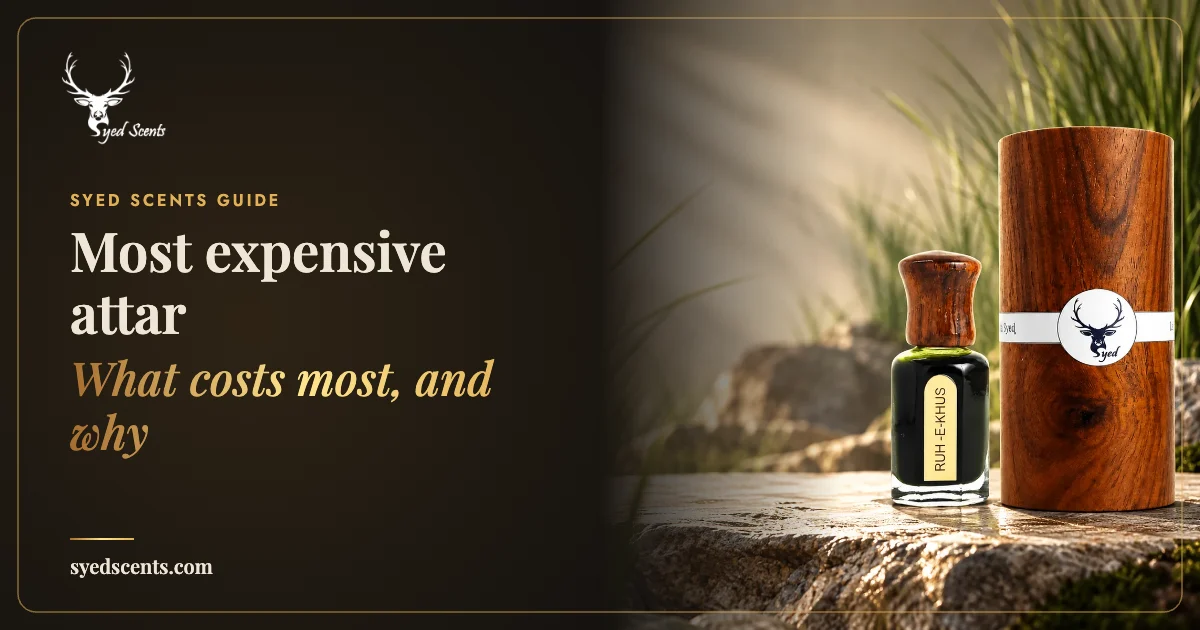
The most expensive attar is real oud made from agarwood oil, followed by ruh gulab (pure rose oil) and attars distilled into pure sandalwood oil. Indian news reports have put top agarwood oil at up to ₹25 lakh a kilo and ruh gulab at ₹8–12 lakh a kilo. The cost comes from rare raw material, tiny yields, slow deg-bhapka distillation and an expensive sandalwood base.
- Agarwood (real oud) is the costliest attar material. It forms only in infected Aquilaria trees, and the trade has been controlled under CITES since 2004.
- Ruh gulab is expensive because of yield: one Kannauj distiller told ThePrint that 400 kg of roses gives about 180 g of rooh gulab.
- Pure sandalwood oil, the classic attar base, cost about ₹1 lakh a kilo in 2021, so any attar on a real sandalwood base costs a lot.
- Most attar price numbers you see online have no source. Ours come from news reports and an ITTO release, with the year for each.
- A ₹600–₹2,000 attar is not agarwood oil or pure ruh. It can still smell rich, as long as the label says honestly what is inside.
Search for the most expensive attar and you will find lists of brand names with no prices, or prices with no source. This guide does it the other way round. It looks at the raw materials that make an attar costly, gives price figures only where a newspaper or official body has printed them, and explains what you are paying for. If you are new to attar, start with our attar guide, which covers what attar is and how it is made.
Which attars are the most expensive?
Five materials sit at the top of the attar price list, roughly from costliest down.
1. Oud (agarwood oil, dehn al oud)
Real oud is oil distilled from agarwood, the dark, resin-filled heartwood of Aquilaria trees. Healthy wood has no scent. The resin forms only after the tree is infected by a mould, and in natural forests only a small share of trees are infected (Wikipedia, Agarwood). All Aquilaria and Gyrinops species have been listed in CITES Appendix II since 2004, and an ITTO–CITES release from November 2022 says prices of up to USD 100,000 per kg have been recorded for top-quality agarwood (ITTO, 2022). In India, ThePrint reported in 2021 that agarwood oil from Assam can cost up to ₹25 lakh a kilo.
2. Ruh gulab (pure rose oil)
Ruh gulab is rose oil on its own, with no base oil. Yield is the whole story: a Kannauj distiller told ThePrint in 2021 that about 180 g of rooh gulab comes from 400 kg of flowers, and the same report said rooh gulab absolute sells for up to ₹8 lakh a kilo (ThePrint, 2021). The National quoted a Kannauj perfumer in 2018 saying a kilo of rooh gulab made on a sandalwood base costs about ₹12 lakh (The National, 2018).
3. Gulab attar on a pure sandalwood base
A gulab attar is rose distilled into a base oil. It costs less than ruh, but with real sandalwood oil as the base it is still expensive. National Geographic reported in 2020 that one kilo of Kannauj rose attar can fetch up to $3,000, and described the finished attar being aged for several months in a camel-skin bottle (National Geographic, 2020).
4. Pure sandalwood (chandan) oil
Sandalwood oil is both a fragrance and the traditional base for Kannauj attars. ThePrint reported in 2021 that it cost about ₹1 lakh a kilo, up from ₹40,000 in 2011–12, and quoted a perfumer saying this pushes the price of one kilo of any attar on a sandalwood base to about ₹1.5 lakh. The same report said only two of Kannauj’s 26 sandalwood oil units were still running (ThePrint, 2021).
5. Saffron and kewra attars
Saffron is costly as a spice before it ever reaches a still, and kewra is a seasonal flower distilled in small batches. We did not find a dated, reliable price for either attar, so we give no number. Treat a natural saffron or kewra attar on a real sandalwood base as expensive, and a cheap one as a blend.
What the costliest attar oils cost
Reported top prices from news reports (2018–2021). Raw oil per kilo, not the price of a retail bottle.
Most expensive attar price table
Every figure below was printed in the source named, in the year shown. These are reported top prices for raw oils, not shop prices for a 6 ml bottle, and they change over time.
| Attar or oil | Why it is costly | Reported price (source, year) |
|---|---|---|
| Agarwood oil (real oud) | Resin forms only in infected trees; protected trade; low oil yield | Up to ₹25 lakh/kg for Assam agarwood oil (ThePrint, 2021). Up to USD 100,000/kg for top-quality agarwood (ITTO, 2022) |
| Rooh gulab (rose oil) | About 180 g from 400 kg of flowers; short flowering season | Up to ₹8 lakh/kg for absolute (ThePrint, 2021). About ₹12 lakh/kg on a sandalwood base (The National, 2018) |
| Gulab attar (rose in base oil) | Repeated distillation; months of ageing | Up to $3,000/kg (National Geographic, 2020) |
| Sandalwood oil | Scarce wood; sales controlled; few distilleries left | About ₹1 lakh/kg, ₹1.18 lakh with GST (ThePrint, 2021) |
| Any attar on sandalwood base | Base oil cost alone | About ₹1.5 lakh/kg (ThePrint, 2021) |
| Saffron, kewra attars | Costly or seasonal raw material | No reliable dated figure found |
What drives attar price?
Packaging and brand add something, but five things inside the bottle matter far more.
- Raw material scarcity. Agarwood and sandalwood come from slow-growing trees whose trade is controlled. Fewer trees means higher prices.
- Yield. Roses give a tiny amount of oil for their weight, so a small bottle of ruh carries the cost of a huge harvest.
- Distillation time. In the deg-bhapka method, the receiver is changed about every three hours, and redistilling with fresh flowers can run for 10 to 15 days (The National, 2018).
- Ageing. Some attars are rested for months before sale, which ties up stock and money.
- Base oil. Real sandalwood oil is the most expensive base. Many makers now use jojoba or liquid paraffin instead, which cuts the price sharply (The National, 2018; National Geographic, 2020).
Attar price in India: what a normal bottle costs
The prices above are for kilos of pure oil. Retail attar perfume prices are on a different scale, because most bottles are blends. ThePrint reported in 2021 that oils from Kannauj range from ₹25 for a 1 g bottle to more than ₹20 lakh a kilo, and that one distiller sorted its range into three grades: ₹10,000, ₹60,000 and ₹1,60,000 per kilo. So when you check an oud attar price or a rose attar price, ask what it actually contains. Our guide to cheap attar vs original attar explains how to read the label.
Can a cheap oud attar be real agarwood?
Not if it is pure. At reported prices of lakhs of rupees a kilo, a few millilitres of pure agarwood oil cannot sell for a few hundred rupees. A low-priced “oud” is almost always an oud-style accord, a blend built to smell woody and smoky. That is fine, as long as the seller says so.
How to get a premium attar experience on a budget
You do not need ruh gulab to enjoy a good attar. Pick a scent family you love and buy from a seller who says how it is made. None of these are among the most expensive attars. They are honest, everyday alternatives.
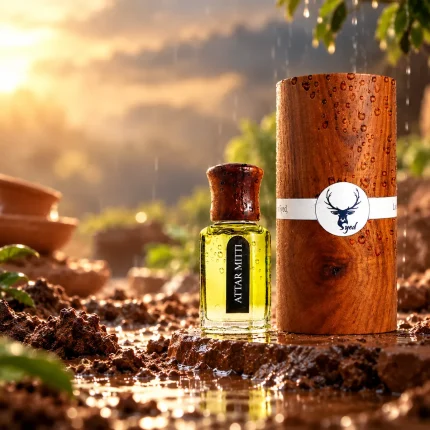
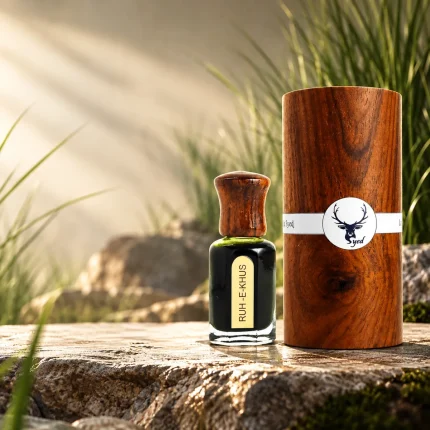
- Distilled attars. Khus attar (Ruh E Khus), Mitti attar and Shamama attar are distilled by deg-bhapka at our own unit in Kannauj.
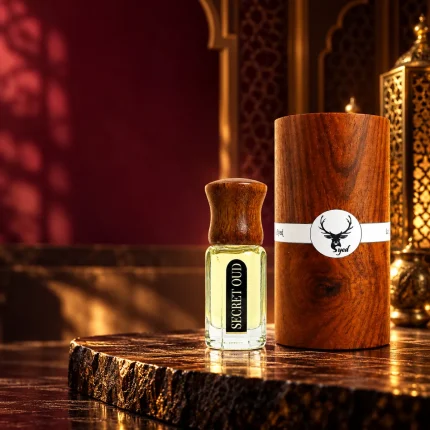
- Oud-style attars. Oud Hindi and Secret Oud use an oud-style accord, not pure agarwood oil. Choose them for the smoky, woody mood at a sensible price.
- Rose and sandal blends. Rose (Gulab) attar and Chandan attar are blends made with imported fragrance oils and bottled in Kannauj, not ruh gulab or pure sandalwood oil.
- Try several. The attar gift box lets you pick four 6 ml attars, or browse everything in the shop.
All our attars are oil-based and alcohol-free, in 6 ml and 12 ml roll-ons. Heavier base notes such as woods and resins tend to last longer on skin than light citrus notes. For more picks by scent, see our list of the best attars to try.
Questions
What is the most expensive attar in India?
Pure agarwood oil (real oud) is the most expensive attar material. ThePrint reported in 2021 that agarwood oil from Assam can cost up to ₹25 lakh a kilo. Ruh gulab comes next, with reported prices of ₹8–12 lakh a kilo (ThePrint 2021, The National 2018).
Why is oud attar so expensive?
Real oud comes from agarwood, resin that forms only when an Aquilaria tree is infected by a mould. Few wild trees have it, the trade is controlled under CITES Appendix II, and an ITTO–CITES release from 2022 says top-quality agarwood has sold for up to USD 100,000 a kilo.
Why is ruh gulab costlier than rose attar?
Ruh gulab is pure rose oil with no base. A Kannauj distiller told ThePrint in 2021 that about 180 g comes from 400 kg of roses. A gulab attar dilutes rose into a base oil, so it needs far fewer flowers per bottle.
What is a fair oud attar price?
It depends on what is inside. Pure agarwood oil is priced in lakhs of rupees per kilo, so a low-priced oud attar is a blend or an oud-style accord. Pay for what the label honestly states, not for the word “oud”.
Does an expensive attar last longer?
Not always. How long any attar lasts depends more on its notes than its price. Heavy base notes such as woods, resins and musk tend to stay longer than light top notes like citrus.
Are Syed Scents attars among the most expensive?
No. Our attars start from ₹599. Khus, Mitti and Shamama are distilled by deg-bhapka in Kannauj, and the rest are blends made with imported fragrance oils. Our oud attars use an oud-style accord, not pure agarwood oil.
Not sure which attar suits you? Message us on WhatsApp and the Syed Scents team will help you choose.
Sources
- ThePrint (21 March 2021), report on Kannauj rose distillation and oil prices: theprint.in
- ThePrint (23 March 2021), report on sandalwood oil prices in Kannauj: theprint.in
- The National (10 October 2018), report on deg-bhapka attar making in Kannauj: thenationalnews.com
- National Geographic (17 December 2020), feature on Kannauj, the perfume capital of India: nationalgeographic.com
- ITTO (November 2022), news release on the ITTO–CITES agarwood report: itto.int
- Wikipedia, “Agarwood” (general definition): en.wikipedia.org
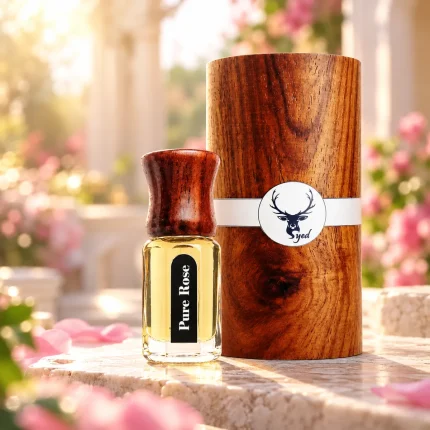
Shop the attars
More guides
 GuideHow to make perfume last longer in Indian weatherWhy perfume fades, the simple steps that make it last, our own 12-hour routine with two sprays, and how perfume…Read more
 GuideEDP vs EDT vs extrait de parfum: what the labels meanEDP means eau de parfum. Here is how EDT, EDP and extrait de parfum differ in perfume oil, wear time…Read more
 GuideMitti Attar: The Smell of First Rain, ExplainedMitti attar is the smell of first rain on dry earth, distilled from baked clay into sandalwood oil in Kannauj.…Read more