
Khus and Shamama Attar: India’s Summer and Winter Attars
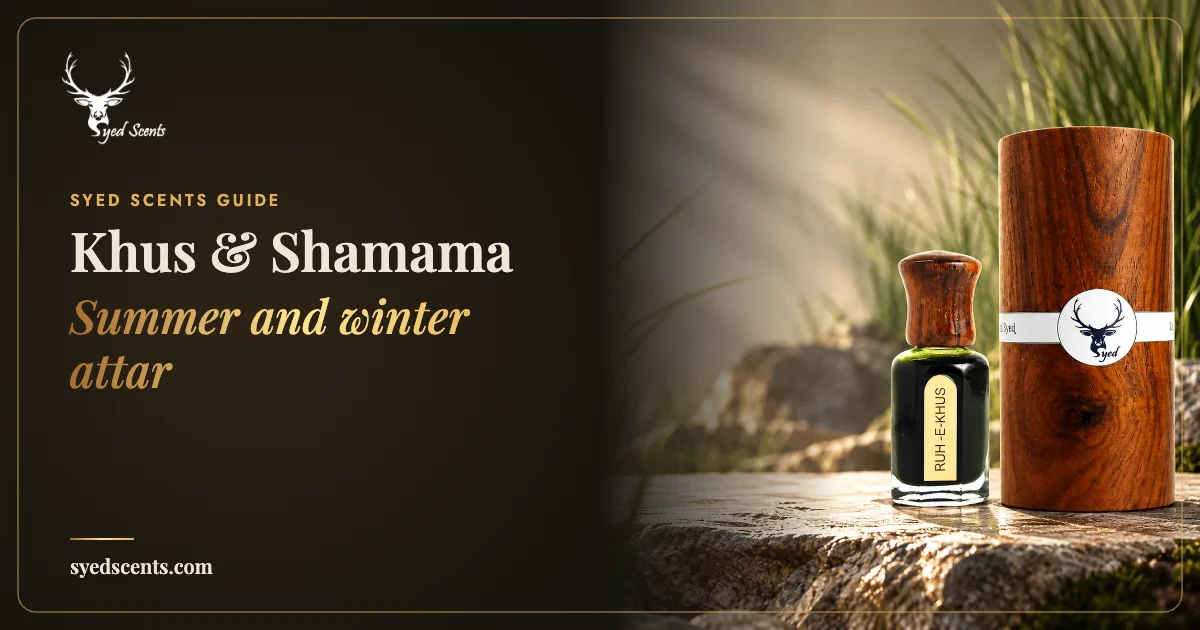
Khus attar (ruh khus) is a green, earthy attar made from the roots of the vetiver grass, traditionally worn in the Indian summer. Shamama attar is a warm, spicy blend of many herbs and spices in sandalwood oil, India’s classic winter attar. Both are old Kannauj attars, and we distil both ourselves by deg-bhapka at our unit in Kannauj.
- Khus is vetiver (Chrysopogon zizanioides), a grass whose roots smell green, damp and woody.
- Shamama is not one plant but a blend: herbs and spices with sandalwood oil.
- Tradition pairs them with the seasons: khus for summer, shamama for winter.
- Khus is medium in strength; shamama is strong and needs only a little.
- Real khus and shamama take time to make, so very cheap versions are usually synthetic copies.
India was wearing seasonal scents long before “summer” and “winter” perfume lines existed. The Tribune puts it simply: khus and kewda for the hot months, shamama for the cold. This guide looks closely at these two attars: what they are, how they are made, how they smell, how to wear them and what they cost. For a wider view of attar by season and occasion, see our attar for every occasion guide.
Khus attar vs shamama attar at a glance
Khus vs Shamama
- Made from
- Roots of the vetiver grass
- Smells like
- Green grass, damp root, dry woods
- Strength
- Medium
- Season
- Summer
- Best for
- Daily wear, office, hot afternoons
- Made from
- A blend of herbs and spices with sandalwood oil
- Smells like
- Saffron and spice, soft florals, deep dry woods
- Strength
- Strong
- Season
- Winter
- Best for
- Winter weddings, dinners, evenings
Notes and strength are for our Khus and Shamama attars, from the product pages.
What is khus attar?
Khus is the North Indian name for vetiver, a tall bunchgrass known to botanists as Chrysopogon zizanioides. According to Wikipedia’s entry on vetiver, its roots grow straight down, two to four metres deep, and the word vetiver comes from the Tamil for “root that is dug up”. (Don’t confuse it with khus khus, which is poppy seed.)
Most Indians know the smell without knowing the name: it is in green khus sherbet and in the woven khus mats once hung over doors and windows in summer. Khus attar captures that smell in oil. When the attar is distilled from the roots, it is often called ruh khus or ruh e khus; “ruh” means spirit or essence.
What does khus attar smell like?
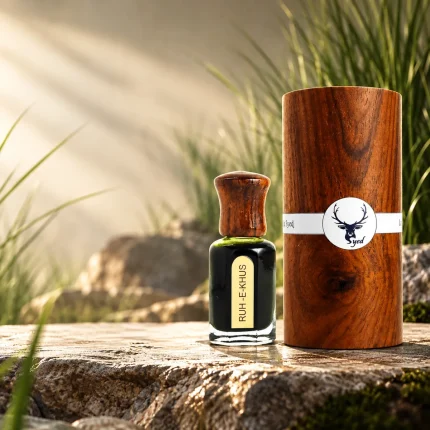
Green, earthy and slightly smoky: fresh-cut grass, damp roots and dry wood. It is calm rather than sweet. Our Ruh E Khus attar has notes of green grass, damp root and dry woods, and is medium in strength.
Why khus is a summer attar
In the attar tradition, khus is one of the “cool” attars, along with rose, kewra and mogra, worn in summer for the cool, fresh feeling people associate with them (Wikipedia, Ittar). That is a tradition about how the scent feels, not a health effect. In practice, its green, watery smell simply feels right on a hot day.
What is shamama attar?
Shamama is not a single flower or wood. It is a blend. The Tribune describes it as a viscous, earthy oil made from rare herbs and spices with sandalwood, and calls it the world’s oldest-known winter scent. It was a favourite of India’s old royal courts and is now popular again with younger buyers.
According to the same report, the base (zameen) is prepared in a deg and then mixed with sandalwood oil, often with other ingredients such as rose oil or saffron. Every maker keeps its own recipe, so no two shamamas smell exactly alike.
What does shamama smell like?
Warm, spicy and deep. Think saffron, dried spices and resin over dark wood, with a soft floral note in the middle. Our Shamama attar opens with saffron and spice, has a soft floral heart and settles into deep, dry woods. It is a strong attar: one swipe is plenty.
How we make our Khus and Shamama
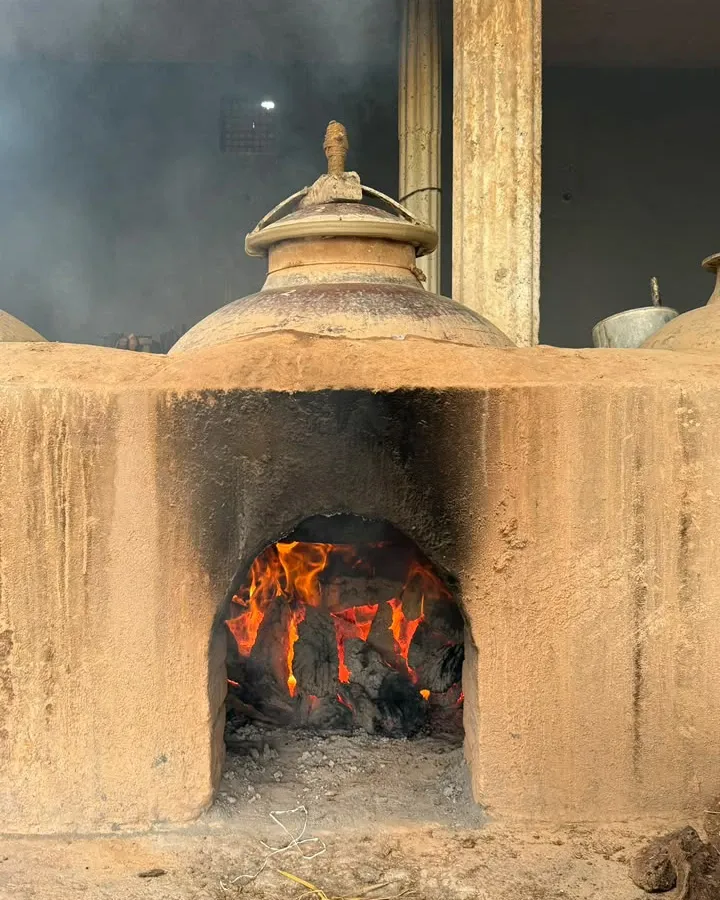
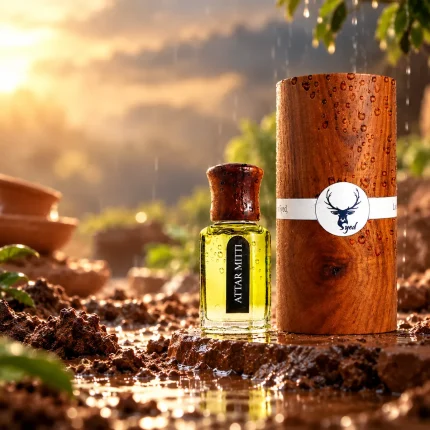
Khus, Shamama and Mitti are the three attars we distil ourselves, by deg-bhapka at our own unit in Kannauj. The materials are heated with water in a sealed copper deg over a fire; the vapour travels through a bamboo pipe into a copper bhapka standing in cool water, where it condenses into the base oil. Our other attars are blends made with imported fragrance oils and bottled in Kannauj.
“Kannauj Perfume” is a registered Geographical Indication. Syed Scents is not an authorised GI user, so our attars do not carry the GI tag, even though they are made in Kannauj.
How to wear khus and shamama
| Khus | Shamama | |
|---|---|---|
| How much | One or two swipes | One small swipe |
| Where | Wrists, behind the ears | Wrists, behind the ears; a touch on a winter shawl (test the fabric first) |
| When | Daytime, office, summer evenings | Evenings, winter weddings, dinners |
| Layer with | Rose or Mitti for a fresh, earthy mix | Rose or Oud Hindi for a richer evening scent |
| Avoid | Very cold nights, when it can feel thin | Hot afternoons, when it can feel heavy |
How long either lasts depends on your skin, the weather and how much you apply. Shamama’s heavy woody base usually lasts longer on skin than lighter notes, because base notes evaporate slowest (Wikipedia, Note (perfumery)). As always, patch test a new attar on your inner arm first.
Khus attar price and shamama attar price
Prices vary widely, because quality varies widely. Distilling roots or a herb-and-spice base slowly by deg-bhapka takes time, fuel and a good base oil, so properly made khus and shamama cost more than synthetic copies. For a sense of the market, The Tribune reported in 2024 that traditional winter attars such as shamama, hina and mushk-e-amber were selling for ₹3,000 to ₹4,500 for 10 ml.
- Ruh E Khus: from ₹1,799 for 6 ml
- Shamama: from ₹699 for 6 ml
Both also come in 12 ml. Delivery is free across India on orders of ₹999 and above.
How to tell a good khus or shamama
- Khus should smell of roots, not of sherbet. A sweet, candy-like green smell points to a flavour-style synthetic.
- Shamama should be complex. You should notice it change from spice to wood over time, not smell like a single note.
- No alcohol. Both should be oil-based, with no cold, sharp spray smell.
- Ask how it is made. A seller who distils it can tell you about the deg, the base oil and the season.
More checks are in our guide to original vs cheap attar.
Questions
What is khus attar made from?
Khus attar comes from the roots of vetiver grass (Chrysopogon zizanioides), called khus in North India. Our Ruh E Khus is distilled by deg-bhapka at our own unit in Kannauj.
What is the difference between khus and ruh khus?
“Ruh” means spirit or essence. Ruh khus usually refers to khus attar distilled from the roots, as opposed to a khus-scented blend or a khus flavouring.
What is shamama attar made of?
Shamama is a blend of herbs and spices with sandalwood oil, sometimes with rose oil or saffron. Each maker has its own recipe. Ours is distilled by deg-bhapka in Kannauj.
Can I wear shamama in summer?
You can, but it is a strong, warm scent that feels heavy in the heat. In summer, wear just a touch at night, or choose khus, rose or mitti for the day.
Is khus attar for men or women?
Both. Scent has no gender, and khus and shamama have always been worn by men and women alike. See our guides to attar for women and the best attar for men.
Why is khus attar expensive?
Real khus attar is distilled slowly from roots that must be dug up, cleaned and heated for a long time in a deg. That takes far more work than mixing a synthetic khus smell, which is why distilled khus costs more.
Try both and decide for yourself: Ruh E Khus for summer, Shamama for winter. Or put both in our 4-attar gift box. Questions? Message us on WhatsApp and the Syed Scents team will help.
Sources
Shop the attars
More guides
 GuideHow to make perfume last longer in Indian weatherWhy perfume fades, the simple steps that make it last, our own 12-hour routine with two sprays, and how perfume…Read more
 GuideEDP vs EDT vs extrait de parfum: what the labels meanEDP means eau de parfum. Here is how EDT, EDP and extrait de parfum differ in perfume oil, wear time…Read more
 GuideMitti Attar: The Smell of First Rain, ExplainedMitti attar is the smell of first rain on dry earth, distilled from baked clay into sandalwood oil in Kannauj.…Read more